
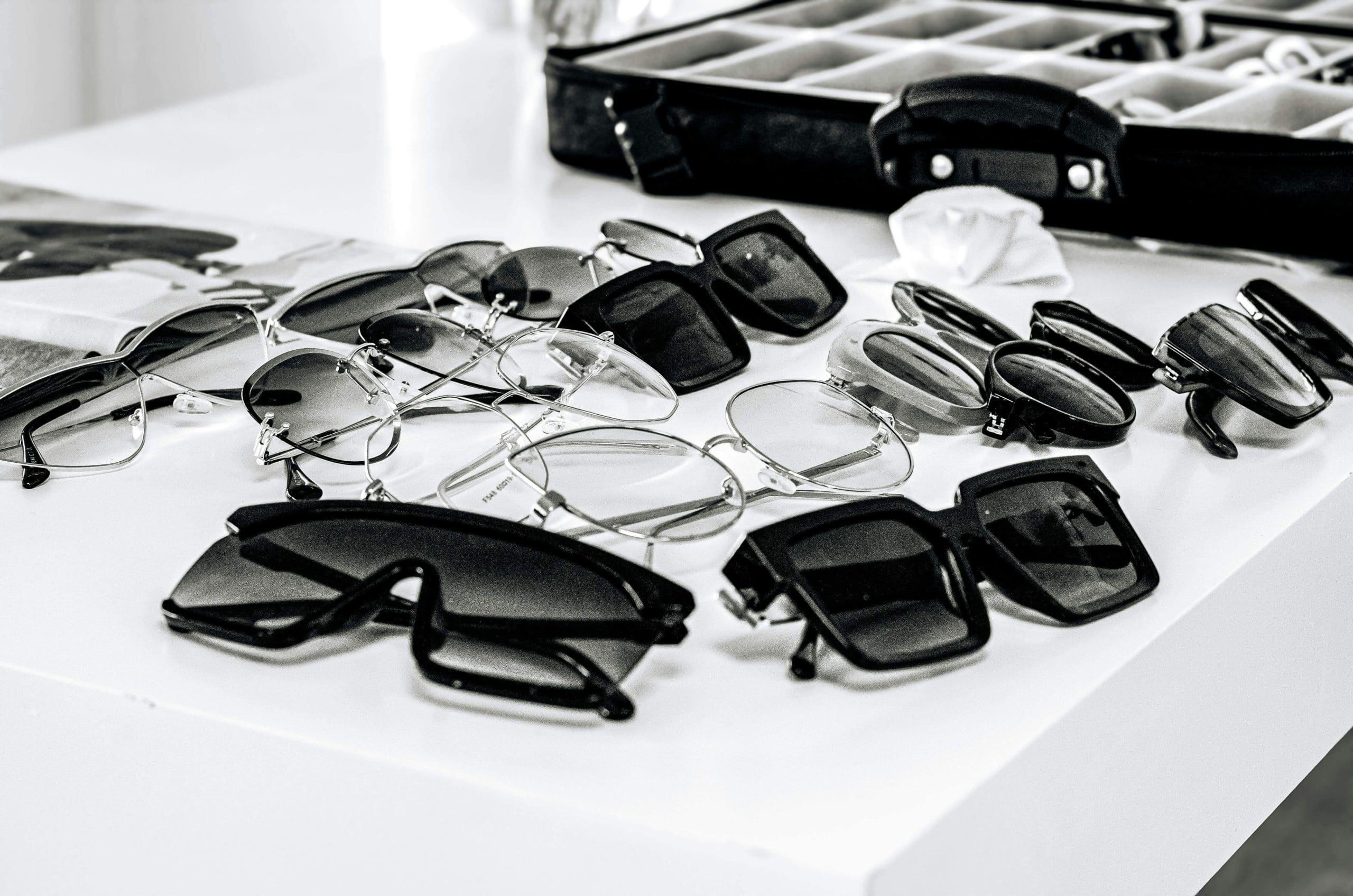
With so many different types of lenses for glasses, how do you know which to choose? Photo by Paul Espinoza.
You’re shopping for glasses or replacement lenses, and you’re faced with a bewildering array of choices. Single vision, bifocals, varifocals, thin-index, photochromic lenses… You need some kind of dictionary to understand all this! Well, here it is. Your handy guide to the many different types of lenses for glasses.
How do you know which type of lens to choose?
The type of lens you need depends on your prescription, your preferences and your daily life. Using the right prescription is a safety concern for some activities, like driving. Other features solve problems for you, like reducing scratches or glare. The type of lens you should choose depends on how you spend your time and which issues with glasses affect you the most.
The three main types of prescription lenses for glasses
Single vision lenses
These lenses correct your vision and match your prescription. They’re your basic glasses.
Distance glasses have single-vision lenses to help you see far away if you’re short-sighted.
Reading glasses have single-vision lenses to help you see close-up if you’re long-sighted.
See our single-vision lens prices.
Bifocal lenses
These have two zones: a long-distance zone at the top and a near distance zone at the bottom. There’s a line in the glass between them.
Varifocal lenses
Also called “multifocal” and “progressive” lenses, varifocals blend multiple prescriptions in the lens. Typically, the top of the lens helps you see distant objects more clearly, the middle lets you see well at arm’s length and the bottom lets you see close-up. There’s no line between the zones.
Read more on bifocals vs. varifocals.
Specialist varifocal lenses
Occupational lenses
These optimise the different zones in a varifocal lens for specific tasks, such as working in an office.
Office glasses
Office glasses have a wide close-up and intermediate zone in the lens to help you with reading and working on a computer. See our Digital Office Lens prices.
Anti-fatigue lenses
Anti-fatigue lenses are distance lenses with a small magnification zone for close-up reading. Read more about anti-fatigue lenses.
Read more about occupational lenses.
Driving lenses
Some brands offer varifocal lenses that balance the near, distant and intermediate zones to be best for driving.
Read our driving glasses guide.
Tinted lenses
Prescription sunglasses
These are sunglasses, made to match your prescription.
Photochromic lenses
These change colour based on the light conditions. They turn dark like sunglasses in bright light. They turn clear like normal glasses in dim light.
Transitions lenses are a brand of photochromic lenses.
Read more about photochromic lenses.
Polarised lenses
These reduce glare by filtering horizontally polarised light that reflects off surfaces such as water.
Other tinted lenses
You can buy lenses in almost any colour. Some are more for fashion; others work as sunglasses to protect your eyes from UV rays.
See our range of tinted lenses.
Lens thicknesses
Usually, a stronger prescription will need a thicker lens. But you can buy thinner lenses that still manage to match a stronger prescription because they bend the light more efficiently. These are called “high index” lenses.
Lens coatings
These are usually add-ons you can pay for on top of your lenses.
Anti-scratch lens coatings
These protect your lenses from scratches.
Blue-light filtering lens coatings
These limit blue light, including from screens.
Anti-reflective coating
Anti-reflective and anti-glare coatings stop you being dazzled by light reflected off surfaces or car headlights.
Hydrophobic / oleophobic coatings
These reduce smears on your lenses from water and oil.
Mirror coatings
These give your lenses a shiny, reflective look (in case you want to dazzle others).
How to choose the best types of lenses for your glasses
If you are simply short- or long-sighted, you might choose single-vision lenses. If you need both distance and reading glasses, then bifocals or varifocals might be a better option.
Photochromic lenses are useful for people who don’t want to buy both prescription glasses and prescription sunglasses.
Other upgrades, like polarisation, tints or coatings, depend on your preference. Some people will be more likely to scratch or smudge their lenses than others – people who wear glasses for sports, for example.
Ultimately, the combination you choose depends on your lifestyle and how much money you are prepared to spend on optional add-ons.
Think about how you use glasses now and the sorts of situations that cause problems for you. Would changing your lenses help?
Ready to choose your lenses?
Now you’re a bit better informed, you can reglaze your glasses (fit new lenses into your existing frames)! Still confused? Our friendly expert opticians will contact you to help you choose.