
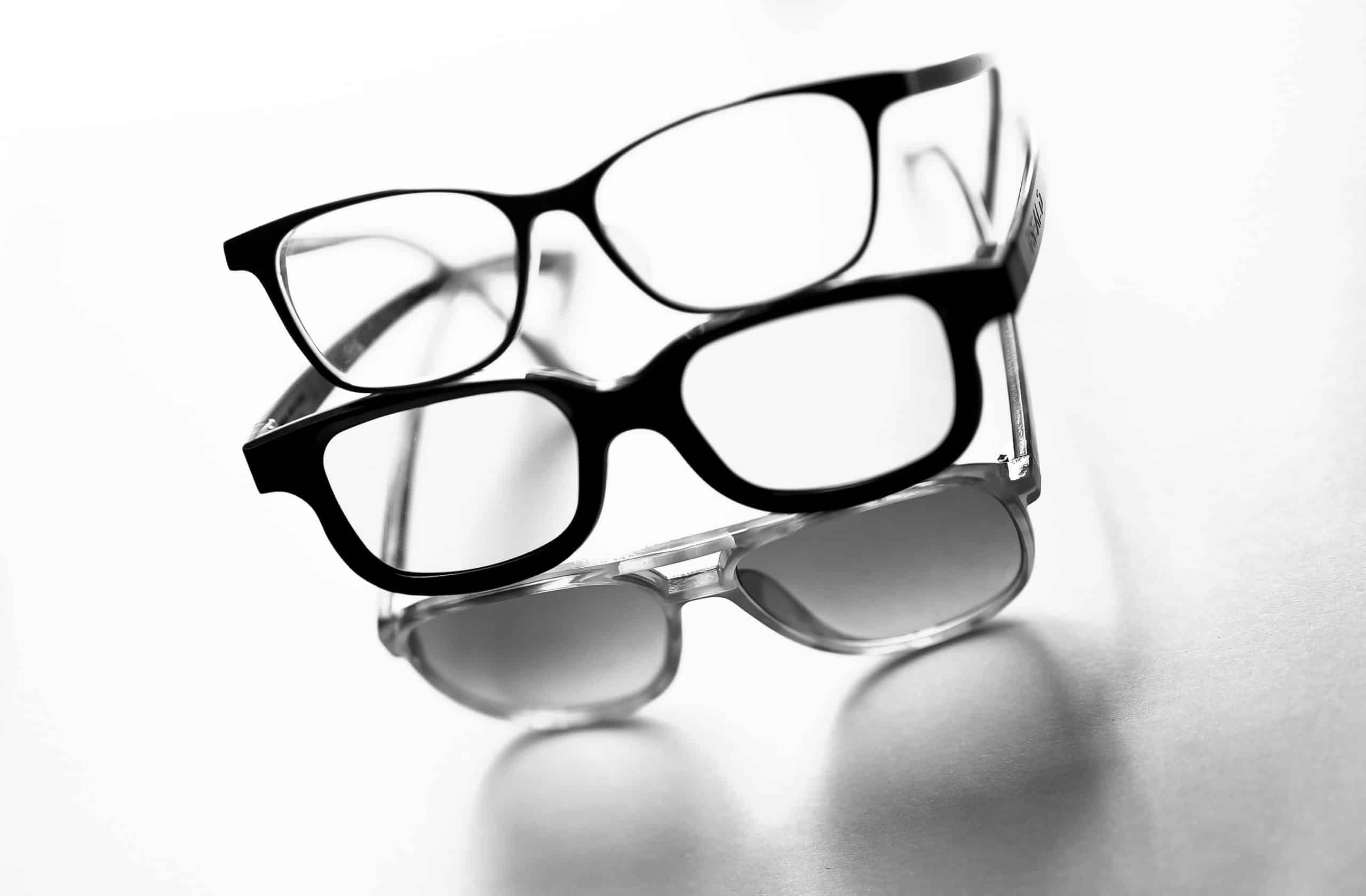
With so many types of varifocal lenses, how do you know which to choose? Photo by che madelar on Unsplash
Do you have a different pair of glasses for every situation? Varifocals replace multiple pairs of glasses by combining long, intermediate and near vision in one lens. But which type is best for you? Don’t worry, help is at hand with our guide to the different types of varifocal lenses.
Why are there so many types of varifocal lenses?
Varifocals were invented in 1959. Since then, lens technology has progressed, leading to a wide range of improved varifocal lenses on the market. When varifocals first appeared, standard moulds meant opticians could only offer limited customisation. These days, freeform digital technology can customise lenses precisely to your prescription.
Freeform varifocal lenses: not your grandpa’s varifocals
Modern computers can shape bespoke lenses for different people with different needs. These “freeform” lenses solve some of the problems of earlier varifocals. For example, they offer smoother transitions between the viewing zones and less distortion at the sides of the lens. In the same way a TV from 1959 wouldn’t be as clear as a modern HD TV, varifocals continue to get better and better.
Read about getting used to varifocals here.
Occupational varifocals
Of course, “better” depends on what you need from your glasses. Standard freeform varifocals provide a good balance of near, intermediate and distance vision for daily life. They should also give you a clearer and wider field of vision than Grandpa’s varifocals from 1959. But if you spend a lot of time working at a computer (for example), you may need glasses that prioritise the intermediate distance more. That’s what occupational lenses offer.
Read more about occupational lenses here.
Specialist varifocals and driving glasses
You can now buy varifocals optimised for a range of activities. Driving lenses are a popular option. They have wider long distance and intermediate zones for long hours on the road while still helping you see your dashboard.
Varifocal sunglasses
Yes, you can get varifocal sunglasses! You can even buy photochromic (colour-changing) lenses or polarised options that limit glare. The combination you choose depends on your needs and budget.
How much do varifocal lenses cost?
Freeform varifocals are the new standard, and most brands offer a range of price points. Typically, you pay more for a higher quality lens, and for customisations such as tints and lens coatings.
We use high-quality freeform digital varifocals, which come in Digital Silver, Digital Gold and Digital Platinum options. Our prices for Digital Silver lenses (our cheapest varifocal) start at £90. We pass savings onto our customers by replacing the lenses in their existing frames, and by doing most of our work in-house or locally.
So, is it worth paying more for premium varifocals? That depends on your budget and needs. Premium varifocals offer a wider intermediate vision zone, with smoother transitions between distances and less distortion.
Which are the best types of varifocal lenses?
There’s a huge range of high-quality varifocal lenses on the market today, which are much better than the lenses available in the past. Different brands offer different selling points, so it’s best to consider what you actually need. Premium lenses with less distortion are easier to get used to but cost more. Specialist lenses reduce eye strain for certain tasks but aren’t designed to be worn all day.
Top tips:
- Customisation is only as good as the measurements provided. Make sure you get an accurate prescription plus pupil height and distance measurements for your varifocals.
- As prescriptions change and technology improves, it’s worth renewing your varifocals every few years.
FAQs
What is the average age for varifocals?
Most people won’t need to consider varifocals until they are in their 40s. This is because varifocals correct long-sightedness that begins in middle age (presbyopia).
Can you adapt the corridor length of varifocals for a customer?
Yes. Freeform varifocals come in different corridor lengths, and we can recommend the option that best suits your needs. Accurate measurements, especially your pupil height, help ensure the right fit.
Do office lenses have distorted soft-focus areas like in varifocal lenses?
Office lenses are designed to reduce distortion at the edges of the intermediate zone, giving you a wider field of view.
Voracious for varifocals?
You can save money by replacing the lenses in your existing frames. We’ll just need your prescription, pupil height and pupillary distance measurements. We can advise you on the different types of varifocal lenses and help you choose the best ones for you.